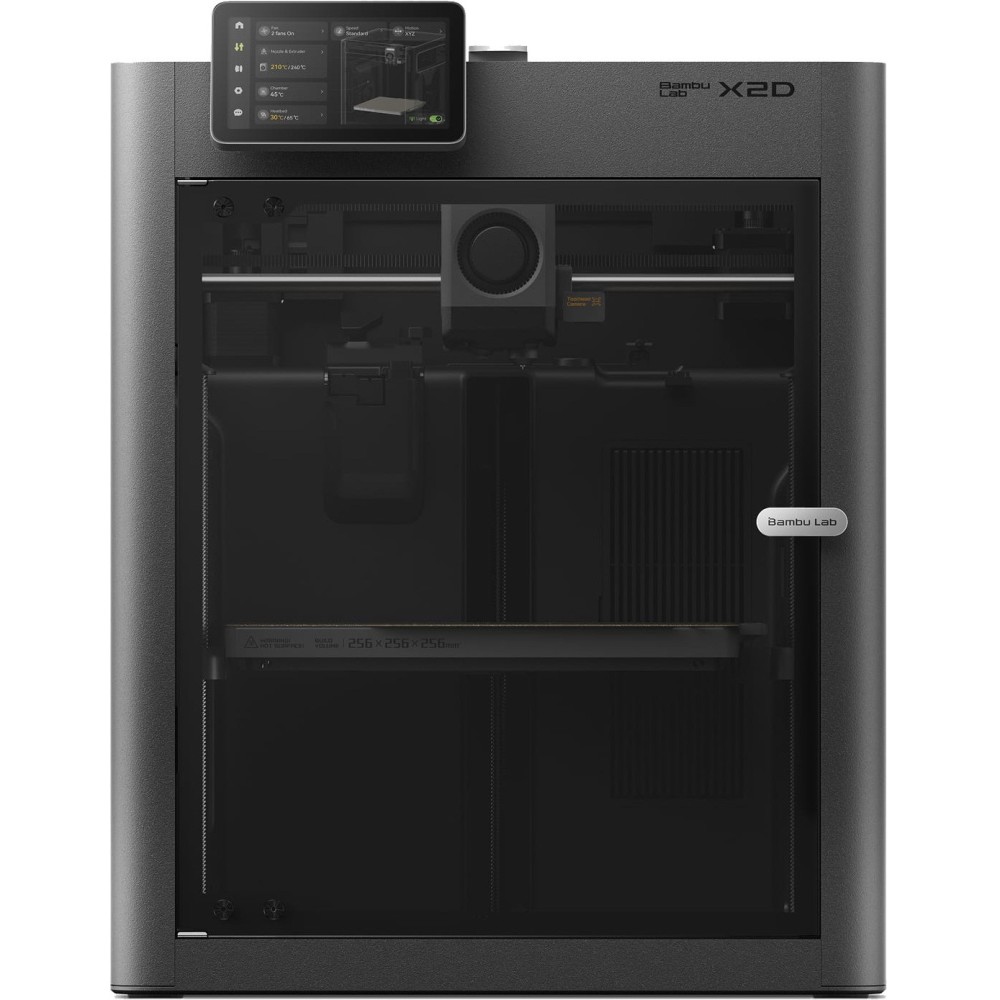
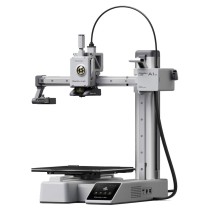
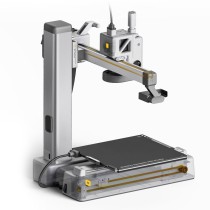
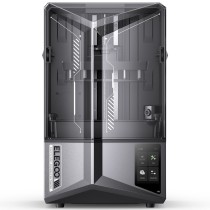
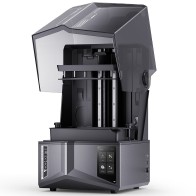
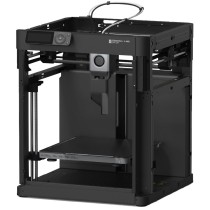
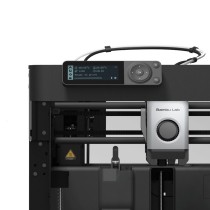
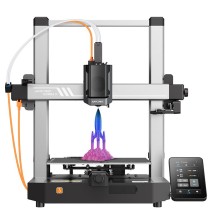
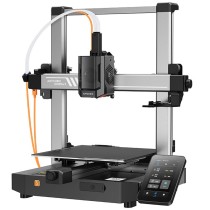
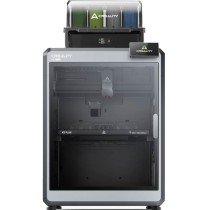
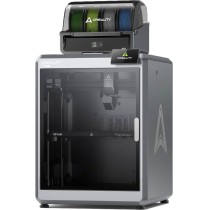
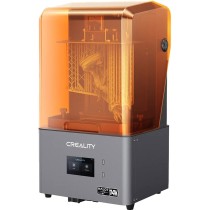
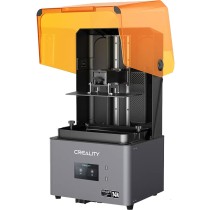
Bambu Lab X2D
A Scalable Dual-Nozzle 3D Printer Built for Precision, Speed, and Future Expansion
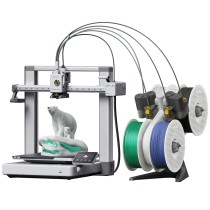
The Bambu Lab X2D is a next-generation dual-nozzle 3D printer engineered for users who demand professional-grade performance without immediately investing in a multi-color system. This model is built on the same advanced platform as the AMS Combo version, meaning all core technologies—mechanical design, motion system, thermal control, and intelligent processing—remain identical. The only difference is the absence of the AMS (Automatic Material System), which is responsible for automated filament switching and multi-color printing. By offering the printer without AMS, Bambu Lab creates a more flexible and cost-efficient entry point while maintaining full upgrade compatibility. This makes the X2D not just a printer, but a scalable production solution that can grow with the user’s needs in prototyping, product development, and advanced manufacturing workflows.
Modular Workflow: Start Without AMS, Upgrade Anytime
Unlike the AMS Combo version, the standard X2D does not include the Automatic Material System, which is typically used for automated multi-material and multi-color printing. However, this is a deliberate design choice that benefits many users. In most real-world applications, especially in early stages, users rely primarily on single-material prints such as PLA, PETG, or ABS. By starting without AMS, users can reduce initial investment while still accessing the full mechanical and computational capabilities of the printer.
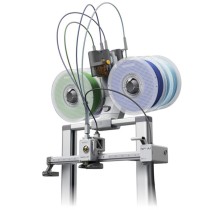
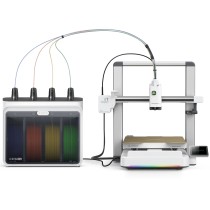
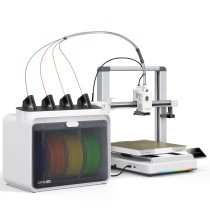
From a technical standpoint, the AMS functions as an external intelligent filament management unit. It tracks filament movement (known as filament odometry), detects tangles, manages loading and unloading, and synchronizes with the printer’s firmware to execute material changes during a print. The X2D is fully prepared for this system, both in hardware and software, allowing users to connect one or multiple AMS units later via a PTFE-based filament routing system. This modular architecture ensures that upgrading to multi-color printing is seamless and does not require replacing or modifying the base machine, making it a future-proof investment.
Dual-Nozzle System: Cleaner Supports and Smarter Material Handling
The dual-nozzle architecture of the X2D is one of its most important innovations, even without AMS integration. Traditional single-nozzle printers use the same nozzle for both the model and support structures, which often leads to difficult removal and compromised surface quality. In contrast, the X2D separates these tasks into two independent extrusion systems. The main nozzle is dedicated to printing the model, while the auxiliary nozzle can handle support material.
Technically, this separation allows each nozzle to operate with optimized parameters such as temperature, flow rate, and material type. For example, support materials can be printed with lower adhesion properties, making them easier to remove after printing without damaging the model surface. The system uses a mechanical gear-and-trigger mechanism for nozzle switching, eliminating the need for additional motors and reducing the overall weight of the toolhead. A lighter toolhead reduces inertia, which improves motion accuracy and minimizes vibration. This is especially important when printing complex geometries such as overhangs, internal channels, and fine details where precision is critical.
High-Speed Motion System with Precision Control
The X2D is designed for high-speed manufacturing, with toolhead speeds reaching up to 1000 mm/s and acceleration up to 20,000 mm/s². However, achieving high speed without sacrificing quality requires advanced motion control systems. The printer uses a lightweight toolhead design to reduce moving mass, which directly lowers inertia. In mechanical terms, lower inertia allows faster direction changes with less force, resulting in smoother and more accurate motion.
To maintain print quality at these speeds, the X2D incorporates active vibration compensation, a real-time control system that detects and cancels mechanical oscillations. These oscillations, often referred to as ringing or ghosting, occur when rapid movement causes slight delays in the printer’s motion system. By analyzing motion data and applying corrective signals, the printer minimizes these artifacts, ensuring sharp edges and clean Details even at maximum speed. This makes the X2D suitable for both rapid prototyping and high-precision production.
PMSM Servo Extruder: Advanced Extrusion Control Explained
A key technological advantage of the X2D is its PMSM (Permanent Magnet Synchronous Motor) servo extruder system, which provides significantly higher precision compared to traditional stepper motor extruders. Stepper motors operate in discrete steps, which can introduce small inconsistencies in filament feeding. In contrast, a servo system operates in a closed loop, continuously monitoring position and adjusting movement in real time.
In the X2D, the extruder samples resistance and filament movement at a very high frequency (up to 20 kHz). If any variation is detected—such as slight changes in filament diameter, friction, or back pressure—the system instantly adjusts torque to maintain a constant extrusion rate. This results in highly stable material flow, which directly improves surface quality. Without this level of control, small pressure fluctuations inside the nozzle can create visible lines or inconsistencies on the print surface. With the PMSM system, these micro-fluctuations are corrected before they affect the output, producing smooth, uniform, and professional-grade prints.
Advanced Thermal System: Nozzle Temperature & Heated Chamber
Thermal management is a critical factor in FDM (Fused Deposition Modeling) printing, and the X2D is equipped with a 300°C high-temperature nozzle and a 65°C actively heated chamber. The nozzle temperature determines which materials can be processed. Standard materials like PLA and PETG require lower temperatures, while engineering materials such as ABS, ASA, Nylon, and Polycarbonate require higher temperatures to melt and flow properly.
The actively heated chamber plays an equally important role by maintaining a stable ambient temperature around the print. This reduces thermal gradients, which are differences in temperature across the printed part that can cause warping or layer separation. By distributing heat evenly, the chamber improves interlayer adhesion and ensures that large or complex prints remain dimensionally accurate. This combination of high nozzle temperature and controlled chamber environment allows the X2D to handle a wide range of materials with consistent results.
AI Monitoring & Intelligent Safety System
The X2D integrates advanced AI-based monitoring systems to enhance reliability and reduce print failures. Equipped with multiple cameras and a network of sensors, the printer continuously analyzes the printing process in real time. Before printing begins, the system checks for proper build plate placement and detects any foreign objects. During printing, it monitors for common issues such as filament tangling, extrusion failure, nozzle clogs, or print collapse (commonly known as spaghetti failure).
If a problem is detected, the system can automatically pause the print, preventing wasted material and saving time. In addition, the printer includes 31 integrated sensors that monitor temperature, filament flow, and system performance. These sensors provide continuous feedback to the control system, allowing it to adjust parameters dynamically and maintain optimal printing conditions. This level of automation makes the X2D highly reliable, even for long or complex print jobs.
Clean Air System & Indoor-Friendly Design
The X2D is designed for safe operation in indoor environments such as offices, studios, and workshops. It features a multi-stage air filtration system that includes a G3 pre-filter, an H12 HEPA filter, and an activated carbon layer. This system reduces airborne particles and odors generated during printing, improving air quality in the surrounding environment.
The enclosed design of the printer further enhances safety by containing heat and emissions within the chamber. When used with compatible materials such as PLA and PETG, the printer meets strict emission standards, making it suitable for everyday use in shared spaces. This combination of filtration, enclosure, and certified low emissions ensures a clean, quiet, and comfortable printing experience.
Identical Core Performance to AMS Version
It is important to emphasize that aside from the absence of the AMS unit, all other specifications of the Bambu Lab X2D are identical to the AMS Combo version. This includes the dual-nozzle system, servo extruder, AI monitoring, high-speed motion system, active chamber heating, and advanced cooling technology.
This means users are not sacrificing performance by choosing the standard version. Instead, they are selecting a more flexible configuration that allows them to invest in additional features only when needed. The printer delivers the same level of precision, speed, and reliability, making it a strong choice for both entry-level professional users and experienced engineers.
A Smart Investment for Scalable 3D Printing
The Bambu Lab X2D is an ideal solution for users who want high-end performance today with the option to expand in the future. Its modular design, advanced engineering, and intelligent features make it suitable for a wide range of applications, from concept prototyping to functional part production.
By combining dual-nozzle technology, servo-driven extrusion, AI monitoring, and upgrade-ready architecture, the X2D delivers exceptional value in the modern 3D printing landscape. Whether used as a standalone system or as part of a larger AMS-enabled workflow, it provides the performance, flexibility, and reliability needed to meet the demands of professional users.


 English
 العربية